The 62nd Chicago International Film Festival delivered an especially strong lineup this year. An impressive number of shows were sold out soon after tickets went on sale.
After watching 51 features and a handful of shorts, I've highlighted five highly recommended entries that put politics on the big screen. Most will never come back to local venues, so you will have to search and stream them online.
Among higher profile titles in the fest that will soon get theatrical runs, I definitely recommend: “Behemoth!,” “Elsinore,” “I Play Rocky,” “Musk” and “Wild Horse Nine.”
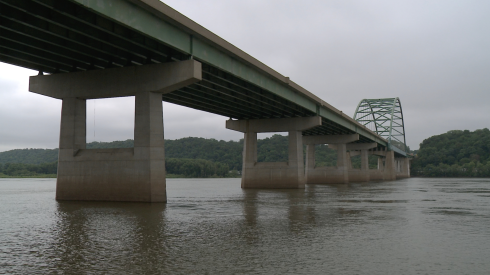
Every year festival programmer Sam Flancher gets one experimental film into the lineup. This time it’s the minimalist, meditative “Eight Bridges” by James Benning, who screened his first film at the fest in 1971. Eight 10-minute shots beautifully frame bridges from coast to coast. First is San Francisco’s Golden Gate Bridge, followed by others over the Alabama River, Columbia River, Hudson River, Mississippi River, Sheyenne River and the Rio Grande Gorge. Longest is the Seven Mile Bridge in the Florida Keys. Benning frees our imagination to interpret the engineering and environment on our own, minus dialogue, voiceover or score. Mindful of patrons overstimulated by cinema and crowds, fest organizers set aside a Quiet Room at the AMC NewCity theater. The serene “Eight Bridges” itself offered one such “sensory-friendly quiet room space” to reset.
“Eight Bridges” is not available for streaming at the moment.
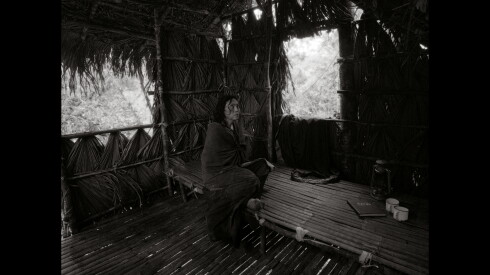
Filipino writer-director-cinematographer-editor-production designer Lav Diaz offers a tragic saga of Catholic colonizers quashing indigenous Malayan spirituality in 1617. Obsessed with building a church, a Spanish priest forces converts to haul a load of costly marble through 50 kilometers of dense jungle. Notorious bandits lurk. It’s all for an altar to complete a 15-year construction effort. Many men have already died to build this church. Shot in indelible black and white, this gripping tale excels as a work of anthropological history. Last year at the festival, Diaz’s “Magellan,” starring Gael García Bernal, covered similar themes. Both films were shot in scenic Sampaloc, Quezon Province.
“Let Us Through, Dear Ancestors” is making the film circuit rounds and is not slated for a wide theatrical release or is available for streaming at the moment.
The latest film by Lee Chang-dong is South Korea’s official Oscar entry for the best international feature film. The plot observes an upper-class woman making a documentary about survivors of a factory strike. Her focus is a working-class family in the aftermath of brutal anti-union violence. Inspired by a 2009 strike at a Korean car manufacturer, this deftly plotted drama incorporates some news footage of the clash. Besides critiquing the ethics of nonfiction directors, Lee scrutinizes class friction. Issues come to a head when the filmmaker and her husband invite her interview subjects for a weekend at their fancy summer house. Ironies and emotions erupt. “Possible Love” won the Ebert Director Award at the Toronto International Film Festival this year.
“Possible Love” comes to Netflix on Nov. 6.
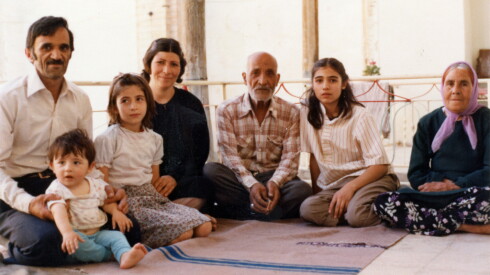
Iranian filmmaker Pegah Ahangarani crafts a compelling personal essay documenting four decades of political crisis in Iran. Starting with her father Jamshid — an Iran-Iraq war vet and a pro-revolution anti-Shah filmmaker who lost faith with the next regime — she portrays four others who resisted censors and oppressors from 1979 to 2026. She skillfully illustrates her memories with family memorabilia, film clips, newspaper accounts, home videos, cellphone footage and internet posts.
“Rehearsals for a Revolution” opens in select cities Jan. 8.
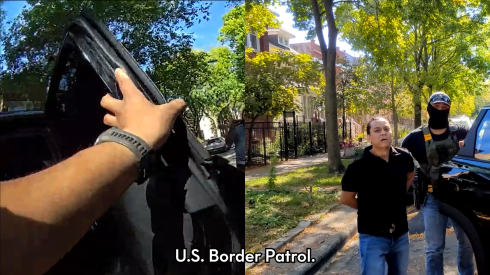
At 12:30 p.m. Oct. 12, 2025, a crew of masked, nameless ICE agents detained a young Latino man on Sawyer Avenue in Albany Park as part of the Trump administration’s Operation Midway Blitz. We see and hear him in the backseat of an unmarked black SUV talking with another young Latino man, via that ICE agent’s body-camera video. Thanks to U.S. District Judge Sara Ellis, that footage made its way into this incredible 18-minute documentary by Hyde Park native and Oscar nominee Bill Morrison. He accessed 65 minutes of ICE’s own video from seven body cameras for that day. Five neighbors on the scene shared 27 minutes of their cellphone videos. We hear them demanding the names of the agents, who call 911 for help driving them out of the neighborhood. At the end, their names appear on screen.
“Sawyer Avenue, Sunday Afternoon” is now streaming on the YouTube page for The New Yorker Documentary.